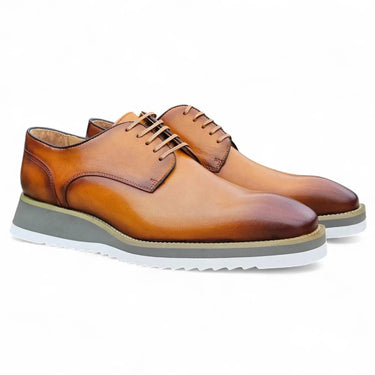
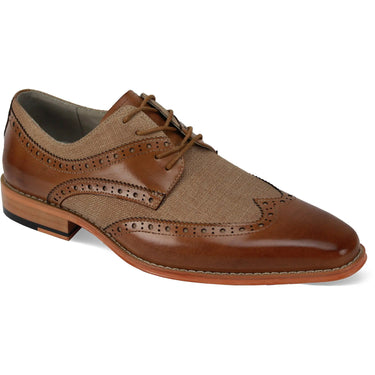
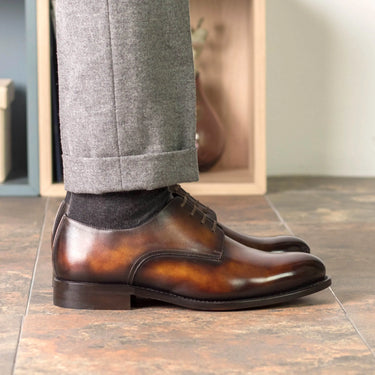
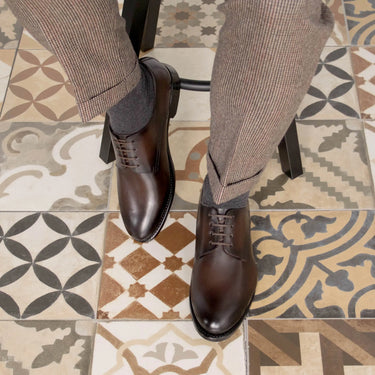
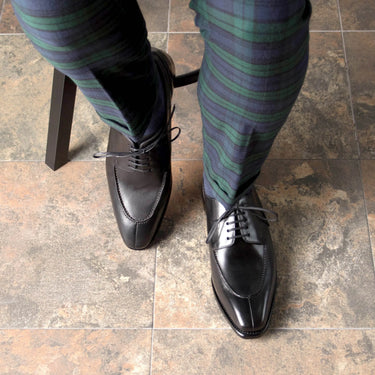
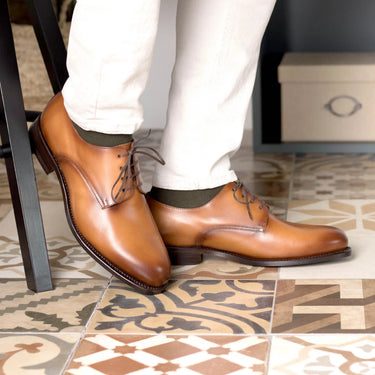
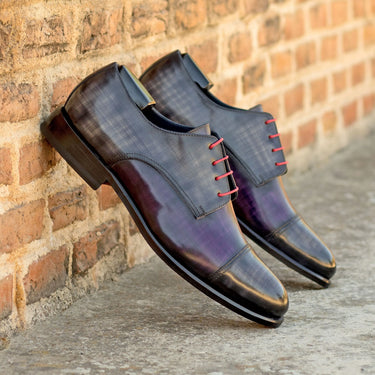
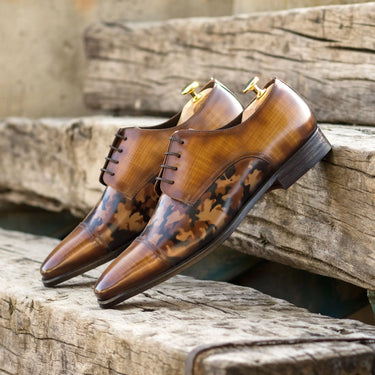
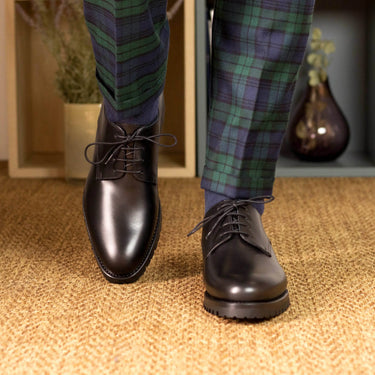
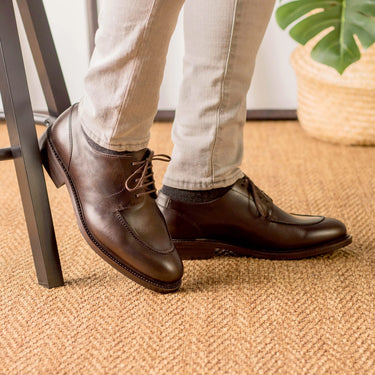
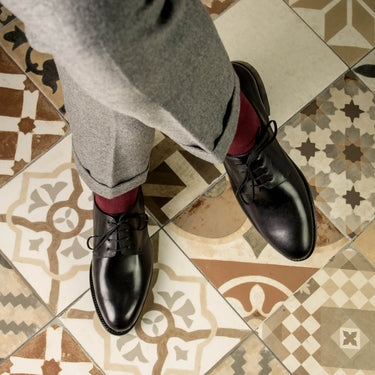
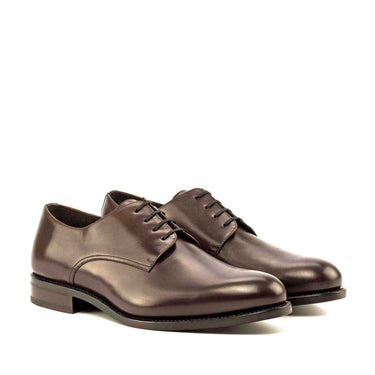
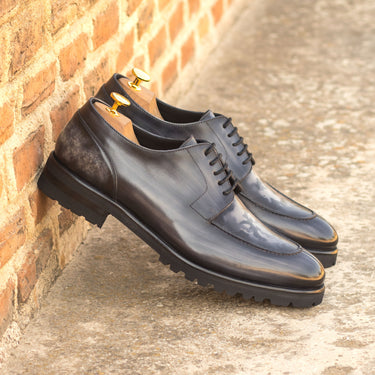
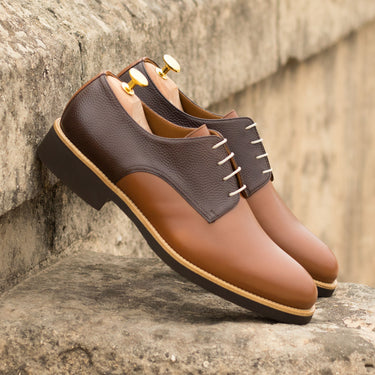
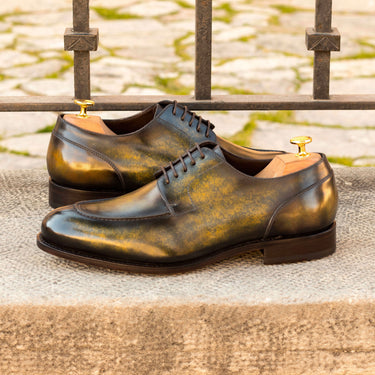
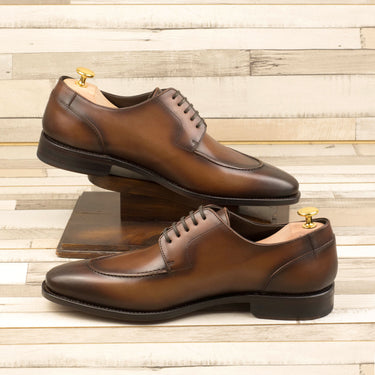
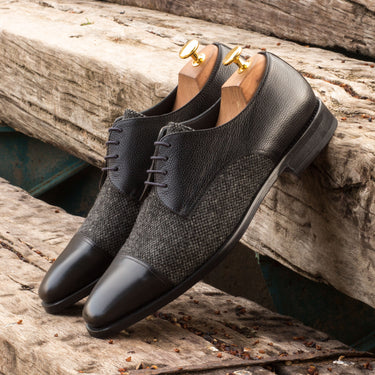
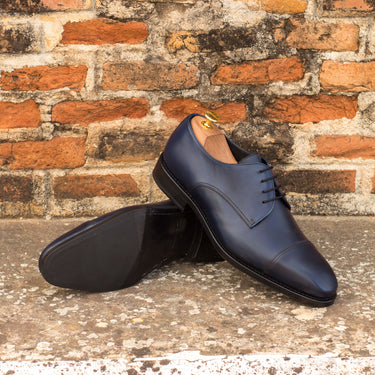
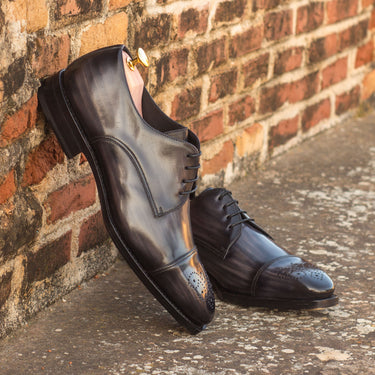
A derby shoe (also called a blucher in the US) features an open lacing system where the eyelet tabs are sewn on top of the vamp, allowing them to open wide. This makes derbies easier to slip on and more forgiving for men with higher insteps or wider feet than closed-lacing oxfords. The derby is the most versatile lace-up dress shoe — formal enough for business, relaxed enough for weekends.
Our derby collection includes split-toe derbies, plain-toe derbies, and brogue derbies from DapperFam (hand-painted in Spain, Goodyear welted, from $375), Giovanni (calfskin from $99), and Belvedere (exotic leathers). Sizes 7 through 13.
Derby vs Oxford: The Key Difference
The lacing system is the only structural difference. Oxfords have closed lacing — the eyelet tabs are stitched under the vamp, creating a sleek, tight V-shape. Derbies have open lacing — the tabs sit on top and can spread apart. In practice, this means derbies are slightly less formal but significantly more comfortable for all-day wear. If you're on your feet for hours at a wedding or walking between meetings, a derby will serve you better than an oxford.
Split-Toe Derbies
Our signature DapperFam Lorenzo split-toe derby ($375) features a raised center seam down the toe that adds dimension to the profile. The split-toe construction uses two pieces of leather joined at the center rather than one seamless piece, creating a distinctive silhouette that catches light along the seam. This design works particularly well with hand-painted patina finishes because the seam creates a natural color transition.
Plain-Toe Derbies
A plain-toe derby has no decorative stitching, perforations, or caps on the toe box. This clean silhouette is the most formal derby option and works well with suits in solid colors. For business wear, a black plain-toe derby functions nearly identically to a black oxford — only shoe enthusiasts will notice the lacing difference.
Materials & Construction
Most of our derbies use calfskin or full-grain leather uppers. Our DapperFam label shoes are Goodyear welted at our workshop in Almansa, Spain — a construction method requiring 120+ production steps and 60 craftsmen per pair. This means the sole can be resoled multiple times, giving each pair a 10-20 year lifespan. For exotic options, Belvedere offers derbies in crocodile and ostrich leather.
Frequently Asked Questions
Are derby shoes formal enough for a wedding?
Yes. A black or dark brown derby in smooth leather is appropriate for most weddings. For black-tie weddings, a plain-toe oxford is traditional, but a well-polished plain-toe derby is acceptable. For daytime and semi-formal weddings, derbies are an excellent choice — especially with a summer suit where the relaxed lacing complements the lighter fabric.
What is the difference between a derby and a blucher?
In modern usage, derby and blucher are interchangeable. Technically, a blucher has a one-piece vamp with the quarters sewn on top, while a derby has separate quarters. But the key feature — open lacing with eyelet tabs on top of the vamp — is the same. In the US, the term blucher is more common. In the UK and Europe, derby is standard.
Can you wear derbies with jeans?
Yes. Derbies are one of the few dress shoes that transition comfortably to casual wear. A brown or tan derby with dark jeans and a blazer is a strong smart casual look. Suede derbies are especially good with denim. Avoid pairing highly polished black derbies with jeans — the contrast feels disconnected.
How do derby shoes fit compared to oxfords?
Derbies generally fit more forgiving than oxfords because the open lacing system allows the shoe to expand across the instep. If you have a high arch or wide foot, derbies will feel more comfortable. Size the same as you would any dress shoe — the ball of your foot at the widest point, a thumb's width of room at the toe.